1
Get the story
A short video or printed introduction presents a problem worth solving.
Children learn science by doing what scientists and engineers do: noticing, questioning, testing, using evidence and trying again.
A short video or printed introduction presents a problem worth solving.
Your child commits to an idea before the result is known. There is no penalty for being wrong.
Hands stay busy while the family gathers observations and evidence.
A second test turns a fun activity into an investigation.
The journal helps children say what happened and what they think it means.
Every mission ends with a new path to explore, not a final answer to memorize.
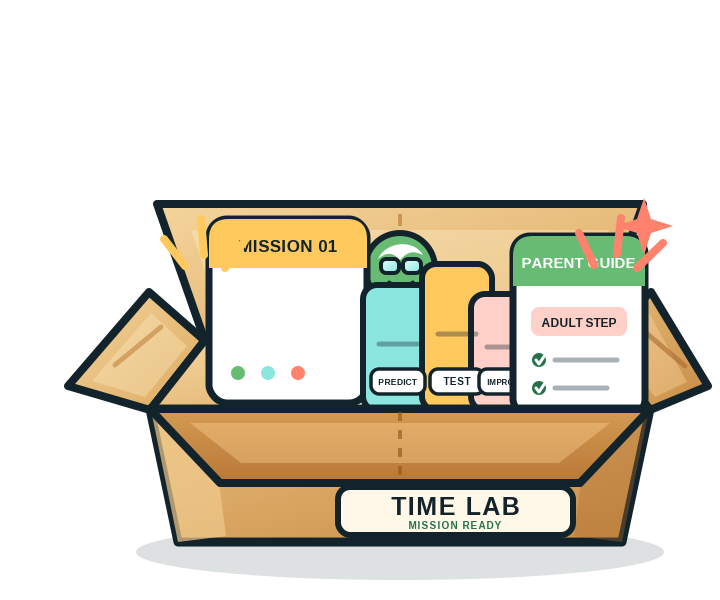
Parent guidance is intentionally short. Useful questions keep the child doing the thinking while the grown-up makes the activity safer, less frustrating and more social.
Every mistake leaves a clue.
That line guides the videos, instructions, field journal and the way we talk to children.